
Season 2 / Episode 10

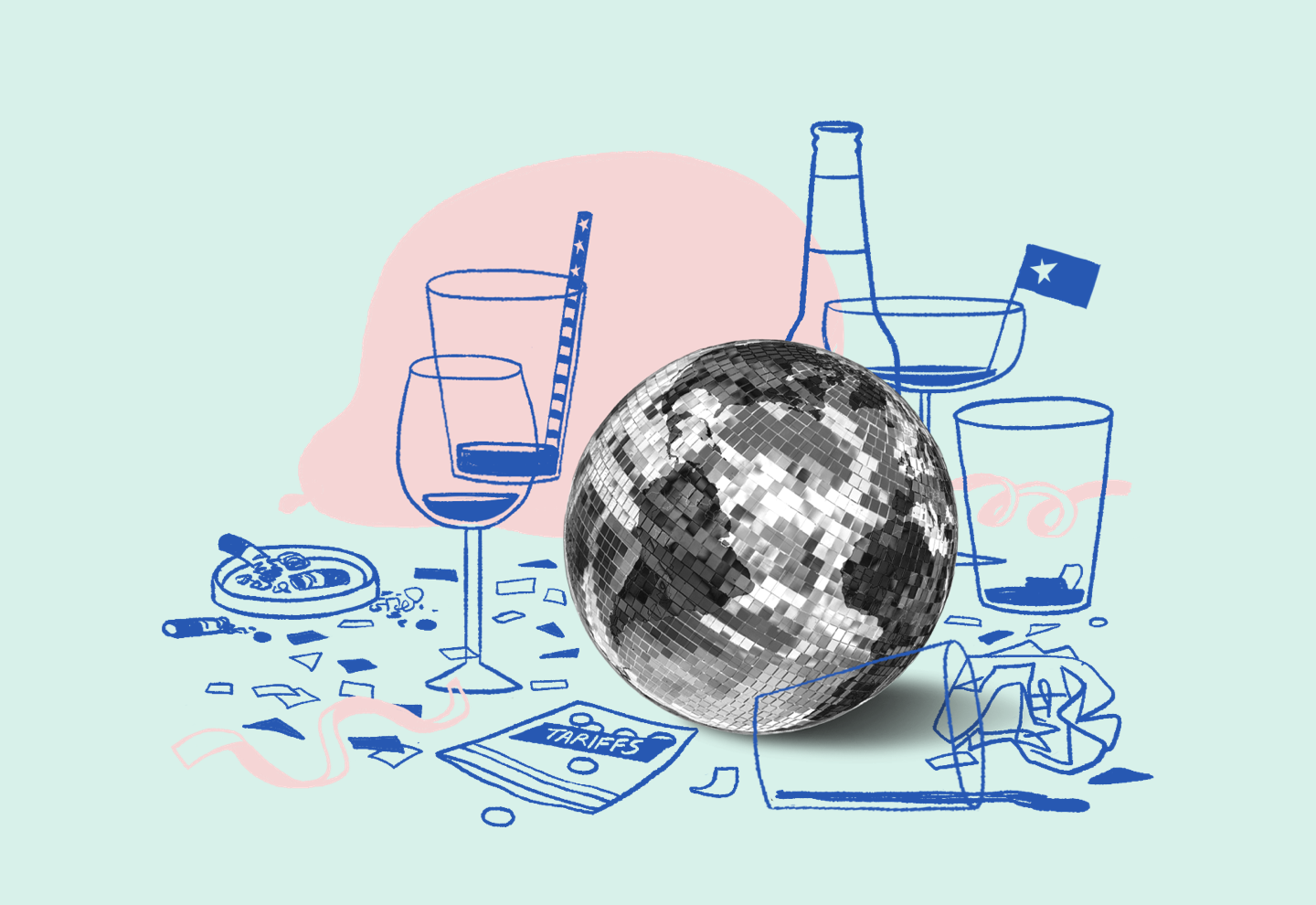
Party Drugs for Trade Wars (unintended consequences with Chad P. Bown and Soumaya Keynes)

New tactics for a new playing field. Jury's out on the doping laws.

PP_S2E10_Web

Episode Description

Dominance on the global stage doesn’t look the same as it once did, and some nations are only figuring that out as others are rewriting the rules out from under them. Global trade has suffered under tariffs, but not always in the expected ways. China has locked down its emergent technology, but nations around the globe rely on its resources still. The Strait of Hormuz remains a very real structural chokepoint for the whole world, and efforts to leverage power around it have not guaranteed outcomes for anyone. Any tactic in a nation’s plans for navigating these seismic global shifts could have unintended consequences.

This episode features Chad P. Bown and Soumaya Keynes, authors of the recently released How to Win a Trade War (Simon & Schuster, 2026). Chad is the Reginald Jones Senior Fellow at the Peterson Institute for International Economics and an expert on political economy of international trade policy. Soumaya is an economics columnist at the Financial Times, and she's focused her research on the US economy and the trade policies of Donald Trump’s first presidency. They discuss the modern playing field of trade wars, policies and tactics that are shaping global operations today.

Mentioned:

Further Reading:

Credits:


Policy Prompt is produced by Vass Bednar and Paul Samson. Our supervising producer is Tim Lewis, with technical production by Henry Daemen and Luke McKee. Show notes are prepared by Rebecca MacIntyre, Libza Manna and Isabel Neufeld, who also handles social media engagement, brand design and episode artwork by Abhilasha Dewan and Sami Chouhdary, with creative direction from Som Tsoi. Original music by Joshua Snethlage. Sound mix and mastering by François Goudreault. Be sure to follow us on social media.

Listen to new episodes of Policy Prompt on all major podcast platforms. Questions, comments or suggestions? Reach out to CIGI’s Policy Prompt team at [email protected]

Featuring

PP_soumaya_keynes

Soumaya Keynes

PP_chad-bown

Chad P. Bown


Chad P. Bown (guest)

We would say regularly things like, "Nobody wins a trade war." Unfortunately, that's not an option anymore. It's no longer okay to say, "We're not going to play. We're not going to engage in this." Everybody's in the trade war now. This is the new world in which we live, and we have to come to grips with that.

Soumaya Keynes (guest)

If you want to win a trade war, you've got to use all of these different tools. Your toolbox is terrible. All of these instruments have unintended consequences. No one should skip into battle thinking this is going to be easy.

Paul Samson (host)

Welcome back to Policy Prompt. I'm Paul Samson (host).

Vass Bednar (host)

And I'm Vass Bednar (host).

Paul Samson (host)

Trade sanctions, tariffs, export controls. Now, hearing those words can make you want to change the channel or zone out, for sure, but don't do that. Don't do that because these actions are actually in our everyday lives right now. What options are we going to have for electric vehicles, cosmetics, chips, apps? The list goes on and on. So it's very real.

Vass Bednar (host)

Super real. I think we're all thinking about it more whether we wanted to or not. When I look at the chart over time of me paying attention to trade, it's definitely shot up. And I think for a long time, trade was just sort of sold to us tacitly as a force for peace, this idea that countries can buy from and sell to each other and then they're less likely to fight. But it really feels like that world has changed, at least sort of. Economic connections still matter, but they're increasingly being weaponized.

Paul Samson (host)

Yeah, it's intense. It's very intense. The question is this new kind of economic battlefield that's right out front of us right now, is that going to continue? Is it tariffs? Are they going to be part of the new normal globally? And even beyond tariffs, the really big things that are going on are about who's controlling the supply chains behind the scenes, the payment systems, cloud services, things like that, even critical minerals and other inputs. All of these things are in play right now in very strategic ways.

Vass Bednar (host)

Our guests today are Soumaya Keynes (guest) and Chad P. Bown (guest). They're authors of the new book, How to Win a Trade War, which seems really useful. Soumaya is a British economist, journalist, and columnist at the Financial Times. Chad is a senior fellow at the Peterson Institute for International Economics, and he was formerly an economics professor and US government official. Together, they're hosts of the podcast Trade Talks, where they have a lovely friendship that I think comes through in the book too and is part of what makes the book optimistic and joyful to read.

Paul Samson (host)

Yeah, the book is a mix. One of the bottom lines in the book is that fighting on the economy in some form or another is here to stay. That doesn't sound positive at all, but the book's subtitle is An Optimistic Guide to an Anxious Global Economy, so they want to find the optimism here. And I guess the big players are writing the new rules of the global economy, so they're going to help us unpack some of this and explore those positive pathways that could make this new economy beneficial for, if not everyone, a lot more than are benefiting.

Vass Bednar (host)

Well, let's get into it. Hi, Chad. Hi, Soumaya. Welcome to Policy Prompt.

We thought to get started, maybe you could speak to us just a little bit about the lovely dynamic between you both. You cite a longstanding friendship of over a decade, and then you have this element where one of you is based in the UK, the other's based in the US. How did your friendship shape the way you wrote this book? And how did you manage to keep a sense of humor while just going through all of this?

Soumaya Keynes (guest)

Oh, I'm so glad that we hid all of the trauma and the conflict in that process.

Yeah, so Chad and I worked together for years. Chad is actually the godfather to my son. So we're best friends, and it's a sign of how much Chad's friendship means to me that we are still friends even after writing this book together. It was very fast. It was a lot of pressure to get to deliver this book quickly, and that was a stressful situation. But part of the dynamic has always been that whenever we argue, the rule is that I win and I'm allowed to take the piss out of Chad as much as I want. And as long as Chad understands those are the rules, everything is fine.

Paul Samson (host)

Well, it's good to know that wallpapering is still tougher than writing a book together. That is the ultimate bar that you may or may not have done.

The idea that fighting is here to stay is one of the things that comes up a lot. And the question that I had was, what form does that fighting take? Is it something that's going to be really new because the economy is in a new form, or is this just really calling out stuff that's already been there for a while? Now, we're going to be more aggressive at calling out hidden subsidies through industrial policy and things like that. What's this fighting going to look like? I know we're starting on the negative and we're going to get to positives later, but what's this fighting about?

Vass Bednar (host)

Yeah, let's make it really stressful right out the gate.

Chad P. Bown (guest)

Yeah, let's be honest. And I think part of this is, just picking up where Soumaya left off, she and I began to work together 10 years ago on a podcast. And back then, we would say regularly things like, "Nobody wins a trade war." But the first part of our book is, unfortunately, that's not an option anymore. It's no longer okay to say, "We're not going to play. We're not going to engage in this." Everybody's in the trade war now. This is the new world in which we live, and we have to come to grips with that. And so the question is, how do you win a trade war? What do you have to do to win a trade war in terms of acting differently?

And so I guess the first thing is you have to recognize what your objective is. And sometimes if you're a relatively small economy, it may be to minimize your wounds. It may be that free trade and openness would be better, but since that's no longer on the table, you have to figure out what's second best. And so that's grappling with the question honestly and acknowledging the new world that unfortunately we face I think is essential to really starting off the conversation. And then once we go from there, it just opens up to everything. The world has changed. Now, we're using all kinds of policies, whether they're tariffs or subsidies or export restrictions, or stockpiling even. To learn about how all of those things work to grapple with the new times that we find ourselves engaged in.

Paul Samson (host)

So everything's on the table essentially. But just one follow-up thing is that you said smaller economies or whatever word it was you used, who is not a small economy compared to the US or China right now? Even the EU is still a patchwork to some degree. So is anyone able to compete against those giants?

Soumaya Keynes (guest)

Yeah. I mean, as you say, the EU punches below its weight. The EU would be the other one, the third one. Maybe given time, India could grow to be as hefty, but it's not quite there yet. That leaves a lot of other players working out what to do.

And I think one of the messages in the book is everyone criticized President Trump for failing to work with allies, for failing to coordinate with some of those smaller players, many of whom share the same challenges. And one of the concerns I have is that, actually, sometimes those smaller countries, those allies, they're not taking enough heat for their own failure to coordinate amongst themselves.

There was the Mark Carney speech about us middle powers need to stick together, but that kind of energy hasn't really been there for a long time. And in practice, it's just extremely difficult to do. And when it comes down to it, what those middle powers may need to do is raise trade barriers against a bigger power like China. Sometimes that discussion about the smaller players working together, doing deals with each other, doing nice positive things, maybe liberalizing trade with each other, having a hug, that all sounds nice, but actually, realistically what it is going to take is for the smaller players to coordinate on sticks, on trade barriers. And it's just far from clear that that appetite to do that is there.

Chad P. Bown (guest)

But it is instructive, I think, per Soumaya's point, to watch what Europe is doing right now. Europe is a collection of small countries trying to act like a large economy to rival the United States and China. And they're at the front lines of the trade war right now when it comes to imports from China. The United States has largely shut itself off from stuff coming in from China because of all the tariffs. China, as we all know, is an export juggernaut, and so its exports have been growing year after year, even though they're no longer coming into the United States. And right now at the front lines of that is Europe. And so watching how Europe is struggling amongst its member states to come up with a common response, but I think it's going to be telling. They really are at the forefront of it right now when it comes to this China challenge.

Vass Bednar (host)

I think one of the words of the year for us last year was definitely tariffs. How do they work? When are they coming? Et cetera, et cetera. And I think when people hear economic warfare, they probably think of tariffs, at least now if they weren't before. Your book, of course, suggests that the battlefield is so much wider now. Maybe we could talk a little bit about what all-out economic warfare might look like today. I really appreciated the smaller example you had in the book about a potential adversary could be anyone trying to disrupt the infrastructure, supporting international trade, an attack on cross-border flows of services, naval drones to slash underseas cables faster than they can be repaired. What else do we need to be thinking of when it comes to risk and vulnerability that we probably haven't in other trade wars or trade discussions?

Soumaya Keynes (guest)

Yeah, I think the on that we've all thought much more about over the past year or so is China and its rare earths. That's the key vulnerability that policymakers woke up to. These are these components that go into car manufacturing, defense, lots of other electronics manufacturing. So that's the one we know about and the one that governments around the world have been racing to try to wean themself off Chinese dominance.

But as you say, things could get much broader than that. And I think from outside the US, one thing that governments are having to look at very, very closely is this point that China isn't the only one with dominance. The US has dominance in many international services. I mean, payments, I use Gmail. There have been concerns, I think, particularly in Europe that services, international services, tech companies, digital payments companies, could become a new frontline in economic warfare I think is really spurring governments to think more carefully about procurement. Should governments be buying from these big US giants rather than cultivating alternatives? Because obviously the risk is that if anything gets too dicey in potentially a spat over a territory rhyming with Schmeenland, the US has some pretty powerful weapons it can fire.

And then there's all the other physical infrastructure. Obviously, the Strait of Hormuz closing. We're living through a fairly extreme scenario that, so far, inventories buffers has mostly protected some areas, but those buffers are going to run out if this conflict isn't resolved soon. And so we're all going to be living through the kind of extreme scenario that geopolitics watchers have been warning about for years.

Paul Samson (host)

Yeah. I've been part of some interesting discussions recently with essentially the G20 countries around the table, think tanks talking about, "Well, how's trade going?" And it's interesting that there are those that come out and say, "Look, look at the data right now." You mentioned that the incredible trade surplus that China has, US deficit as well is as big as ever, but there's not a massive disruption in the trade flows in terms of total volume, nor is there a breakdown from far lands continuing to trade. So some people are saying, "Hey, this trade tariff spat, we'll get over it and there's not that big a deal." But what you're saying is it's actually much deeper, and it's certainly not just about tariffs, but we're heading into a very major reconfiguration globally. And so you don't think those trade stats are really that revealing of what change is going on.

Chad P. Bown (guest)

Yeah. I mean, I spent far too much time recently looking at the US import and export data, for example, trying to understand with all the tariffs that the President Trump put on last year, it turns out that US imports from the world actually increased despite all of those tariffs. And so you say, "How is that possible?" There were so many tariffs. And the story is that it's complicated, that US imports from China fell by more than 25% last year, so the tariffs on China had an extreme impact. US imports from the rest of the world increased. Why was that? Well, some of it was supply chains moving. So some of it was the big multinationals that learned the lesson from the first Trump administration that, Apple and the iPhone are a really good example there, built up secondary supply chains to be able to assemble the iPhone, for example, in India. So when President Trump imposed tariffs on the iPhone on China in February and March of last year for the first time, Apple could pivot and suddenly just source from India instead.

And it looks like in the overall trade statistics, nothing happens. Supply chains are resilient. Okay. But when you look even deeper, the real answer behind why at least US imports from the world survived last year is really something else entirely, and it's the AI story. The massive increase in imports from Taiwan and Mexico are really being driven by the fancy semiconductors that NVIDIA designs but that are only manufactured by, at least at the moment, TSMC in Taiwan. And then Foxconn, another Taiwanese company, grabs those and assembles them into racks and data servers that have been shipped to the United States, either from their facilities in Taiwan or in Mexico, to build out the massive boom in data center infrastructure in the United States. But once you strip that stuff away, the US trade data actually doesn't look that great last year.

So the point is, aside from tariffs, there's a lot of other stuff going on in the global economy as well. AI is one big thing. I think this year, the data's going to be complicated by what's happening with energy and energy prices in particular, so we're going to have to look at volumes instead of just value. Anyway, the world is a complicated place and supply chains are still moving in response to some of the trade war.

Soumaya Keynes (guest)

Can I just add to that, which is one thing that we have seen is that trade is reorganizing so that it's increasingly between within geopolitical blocks. There still is a lot of trade between those geopolitical blocks, but it looks like companies have really internalized the message that you shouldn't be relying exclusively on cross-block flows.

The other thing I would want to say is that I think there's this idea that deglobalization or trade barriers could reduce overall trade flows, but that's not necessarily the case. So if you think about a world in which you've got pure efficiency, and actually, the most efficient thing is for everything to be produced in China and then for it just to be shipped out the rest of the world. Right?

Paul Samson (host)

Right.

Soumaya Keynes (guest)

Now, think about a scenario where, actually, you've got walls up everywhere. Now, what's going to happen is supply chains might reconfigure so that it's going from China to Vietnam to Mexico to the US. And that's going to be recorded as, Vietnam, Mexico, US, that's going to be recorded as triple the value of trade flows as in that first scenario because of how many more times those goods are crossing borders. So it'll look like trade has gone up, but actually that's just a consequence of the fragmented global economy. And so there really is a disconnect between the aggregate trade flows and the underlying question of, do we have a single market for goods around the world or is it becoming more fragmented?

Vass Bednar (host)

Maybe we could talk about export controls, limits on what companies can sell overseas. Your analogy is that they're trying to keep an unruly teenager indoors. Not sure if you guys have direct experience with that. And you also call import barriers party drugs. Could we talk about both of those levers or tactics and how people should be thinking about them now?

Soumaya Keynes (guest)

Yeah. So I think the point with both of those is that there are unintended consequences. And stepping back, if you want to win a trade war, you've got to use all of these different tools. Your toolbox is terrible. All of these instruments have unintended consequences. No one should skip into battle thinking this is going to be easy.

So the idea is that you're a parent and you are trying to control your teenager's behavior. And in the real world, I am the government and the teenager is a company who wants to sell overseas. And the point is that you might just apply this export restriction, you might apply curfew to your teenager, and they might try to escape. Maybe a neighbor comes and brings a ladder-

Paul Samson (host)

They will try.

Soumaya Keynes (guest)

... to help them climb out the window. And so it's not that it's impossible to apply an export restriction, but it can be a very big undertaking.

So let's just take an example. We've got lots of experience from not too distant past of dealing with the Russian export restrictions, sanctions. And what happened was that the US, Europe restricted sales of particular products to Russia, and lo and behold, other countries filled in the gap. Or sometimes those Western products would actually go to Russia through other countries. It was still those US and Western products. And so what happened is officials then had to get on a plane and essentially start browbeating other governments to make those export restrictions work and to make sure that they were enforcing export restrictions as well.

So the message is not that it's pointless or it's a futile job to try to control that unruly team. The point is that it will take much more work than you were hoping. You're going to need to barricade that window. You're going to need to make friends with the other teenager's parents, making sure that they don't get that ladder to help your own teenager escape.

Paul Samson (host)

Cut the wifi.

Soumaya Keynes (guest)

Right. You can tell that... Enough with the analogy. But when applying these export restrictions, you can't just say, "Hey, I restrict this." Even the US has to put in the effort of actually enforcing these things, and that involves cooperating with other governments and making sure they have the infrastructure in place too.

Chad P. Bown (guest)

Okay. Party drugs and tariffs, import restrictions. So this is another place where Soumaya and I had sharp arguments in the book, and the sharp argument here was which of us was less familiar with drugs because we're both really nerdy and probably far too straight-laced. But President Trump has made it seem like tariffs are the amazing party drug, nothing but good. It's so much winning.

Now, the challenge is in the real world, tariffs, again, come with these unintended consequences. So maybe it's like marijuana, where it just makes you sluggish. In the sense if you can think about firms, companies, they don't face enough competition because they're protected because of high tariffs. They don't innovate. They don't compete. They're costly. They mean higher prices for consumers in some instances, and that's especially important in a world like today where we have affordability crises and concerns. The reality is tariffs, for the most part, are going to generate higher prices. So those are the unintended consequences.

We do suggest that there obviously are prescription medicines, some drugs that you need to take, sometimes even a little bit of caffeine. So this is to make the point that in a world, the world that we live in right now where we do need to move some of these supply chains to address the real fundamental underlying concerns that we have that we should be fighting a trade war over, again, if you think about the market dominance, China, rare earths, permanent magnets, the problems we saw last year, tariffs may be part of the solution to that, but really only if you use them, I don't know, per doctor's instructions, whatever the saying is on television. You got to use them in a targeted fashion, limited, and really know what you're doing. And unfortunately, at the moment at least, that's not the way the United States is going about using tariffs.

Paul Samson (host)

Right. There's a long list of side effects, like they announce on those ads.

Let's pivot to geopolitics overlay to what you're describing here. So if we think of this, the economy's transforming, the blocks are being more significant than they were in the past, there's restructuring going on, there's new technologies. What about the Strait of Hormuz, the disruption in Suez before, even uncertainty about the Panama Canal, just these choke points? Are those factoring into this transformation likely to accelerate even some of the changes that are perhaps in motion already? What's your view on that geopolitical choke-point question?

Soumaya Keynes (guest)

Yeah, so I've got a couple of ways into this. So one is that I was recently reporting on the state of the critical minerals race, so the state of Western efforts to wean themselves off China's dominance in rare earths. One thing I heard was just how incredibly distracting the Strait of Hormuz situation had been. There's only so much bandwidth that senior officials have. And these are big challenges. And so one thing I was hearing is that it really was there was crowd out there.

I think there's another parallel. So with export restrictions, sometimes there's a line that export restrictions are a one-shot weapon. And so the Strait of Hormuz has been closed and this choke point has been weaponized, and now we're seeing governments respond. So we're seeing other governments in the Gulf invest in, or at least consider investing in new infrastructure, expanding existing infrastructure. We've seen prices go so high that actually fertilizer is being trucked out to a port outside the strait. We've actually seen, I think something like a third of the reduction in oil flowing out of the strait has been made up by oil flowing out through other ports.

So there has been a response. And the message is there that if you apply export restrictions, actually your target will adapt, to an extent. And in a sense, that's a comforting message because it suggests that, yes, this is a chaotic world, Strait of Hormuz being weaponized is part of that, but actually what the weaponization does is it forces the target to adapt and protect itself. And so these weapons will blunt themselves.

And so I was looking into that and I was thinking, well, maybe the trade wars, they'll all be over. It's just a little blip, and then we'll be safe because we'll have protected ourselves. But actually, one message in the book is if you look back through history, that isn't always what happens, for two reasons. One, the factors that generated that dominance, that choke point in the first place are the same factors that make those choke points hard to wriggle out of. So think about the Strait of Hormuz oil. We already had big oil price shocks in the '70s and the '80s and cars already became much more fuel efficient. We already got rid of the easy uses of oil. The ones we're left with are the ones that are much harder to substitute away from. If you think about infrastructure, Iran can see new infrastructure, maybe that infrastructure might be a target.

So the second reason that these choke points can last is that the dominant actor can also react. They can also adapt to reinforce their dominant position. And so we're seeing this in the case of China. China's working actively to restrict exports of technology, equipment that would allow other actors to become more independent of China. I feel a bit bad because the subtitle of book is An Optimistic Guide to an Anxious Economy, and I do think there are some causes of opportunism. You can do something. There are ways you can protect yourself, but we shouldn't pretend that this is all just going to end soon. We're going to protect ourselves and it's all going to be great and we can skip off into the future.

Vass Bednar (host)

Policy Prompt is produced by the Centre for International Governance Innovation. CIGI is a nonpartisan think tank based in Waterloo, Canada with an international network of fellows, experts, and contributors. CIGI tackles the governance challenges and opportunities of data and digital technologies, including AI and their impact on the economy, security, democracy, and ultimately our societies. Learn more at cigionline.org.

We're speaking to you from Canada. We're both Canadians, though CIGI has an international focus. Let's face it, Canada often has little choice but to stay quite close to the US, what you memorably call staying near the pirate side. That closeness also has cost for us and has had costs in the past, the Chinese retaliation against the two Michaels, for instance, canola restrictions, the Huawei arrest, and now tensions over EV tariffs. Any thoughts on how Canada can be thinking about this price of alignment with the US while we're simultaneously trying to diversify our trading relationships as quickly and best that we can?

Chad P. Bown (guest)

This is one of the, I think, challenges that we have in understanding the US administration. And so we're hoping also the US administration will read our book and take the lessons on because-

Vass Bednar (host)

[inaudible 00:27:50].

Chad P. Bown (guest)

... yes, Canada has been taking efforts to diversify in, furthering on the example that Soumaya just gave, these investments that you're making to ship more oil through pipelines, not to the United States, but out to your Western ports, looking toward Asia as alternative markets is a step in that direction.

But what's really challenging, I think, and what the administration needs to be convinced of is the benefits of scale that can be achieved if you think about not just the US economy in fighting this bigger trade war with respect to China, but how much more that you achieve when you have not just the US economy, but you've got the US and Canada together, but then also put on top of that, Europe, Japan, Korea, all these market-oriented economies, most of whom all face the same challenge with respect to China. China's huge. 1.4 billion people. Even the United States is not that big, and we could benefit incredibly from scale.

Now, what I'm hoping happens is that at some point, cooler heads prevail. To be fair, of all of the countries in the world that the United States should be complaining about in terms of what Soumaya indicated before, alignment with US policies, Canada's low on that list because, as you rightly noted, Canada's done a lot of really controversial and difficult policies over the years that have brought themselves into alignment with the United States, EV tariffs, the Huawei extradition, steel is another. So Canada is one of the really difficult ones to understand, I think, from the United States perspective why the administration is choosing to do what it is they're doing, given all that, sorry, Canada has done over the years.

Maybe Soumaya, as a external observer, has more insight than me into this question.

Soumaya Keynes (guest)

So I think the question was, what tip do we have for Canada? So what can Canada do? And Mark Carney is clearly talking about middle powers working together. And I think what you see is a certain amount of hedging, but between the two big beasts. There's a certain amount of, "Well, we're going to try and befriend China. We're going to do a deal on EVs. We're also going to try and..." Well, at least in the rhetoric, maybe not befriend the US, but practically speaking, Canada is just very close to the US. And I think my advice would be to think about the structural problems and think about beyond this Trump administration. For the next couple of years, it's going to be survival, getting through it, but after that, the structural challenge is China, and I don't think it makes sense to be pretending to the Chinese that in a contest that Canada might choose China, because I don't think that's realistic.

And I think in those conversations with the other middle powers, I think the question is, how can you set a path and start on a journey so that when the US stops doing whatever it's doing, there's something that a more sane US administration could lock into? And part of that is going to be establishing with those other middle powers that just liberalizing, doing nice things with each other isn't going to be enough. It's coming up with a roadmap to say, "Okay, we've got this mechantalist force in China that just wants to export and export and export and not import anything. And we need a strategy to deal with that. And openness to everyone isn't going to work, and so what are we going to do together about that?"

Chad P. Bown (guest)

And I guess, sorry, let me jump into one other practical thing, which is critical minerals. So Canada's got a lot. We saw what happened last year with the shortages of rare earths because of China's export restrictions. That's front in mind for the United States right now. Rare earths are not the only critical mineral that China has market dominance over. It's the one they've chosen to weaponize so far, but there's a lot more. The more that Canada can do to help solve the United States' problems when it comes to the need to diversify and find alternative sources of critical minerals, I think the more grateful future US policymakers will be. So that could be something that Canada could choose to invest in as well as a strength.

Paul Samson (host)

Totally agree that critical minerals is at the top of the list there for how Canada and the US find a path forward.

Let's stick with middle powers for a second because you've both touched on it a few times. You mentioned Mark Carney's speech. The word middle powers or the term middle powers that is raised about every 30 seconds in my world these days because everyone's like, "What's Canada going to do? What does middle powers means?" There's a lot of discussions about that. But once you get really concrete about, well, what would it look like, to what you were both saying, how do you get concrete?

And the example that usually I find is the most robust is if you imagine the Comprehensive Progressive Trans-Pacific Partnership, the long acronym CPTPP. Right now you've got Canada, a lot of other countries in there. The UK joined recently. The EU is not a member. China's not a member. The US is not a member. But there's a discussion now about the EU joining. There's actually a working group now that's been started formally between governments. And you could imagine that happening. And then to the points that you're both making, then that's a pretty big group. That's a pretty big economic block to set standards or block, but at least an agreement, and to say, "Here are the rules of the road on digital." Or, "Here are the rules of the road on certain areas. And if you want to join China or the US, these are the rules."

And so it's pushing some ideas and standards forward that might catch, but it's also setting boundaries around where trade might evolve. So it's easy to get picked off as well, but what are your thoughts on that kind of thing? Is that an example of where middle powers could band together and play?

Soumaya Keynes (guest)

I suppose my concern is that that falls into the category of doing nice things with each other, but not really changing the calculus for anyone else and not really solving the problem at hand, which is, as I mentioned, the mechantalism of China. And so my concern is that it's not enough because China already has pretty good market access to members of CPTPP. And so if what you're describing then progressed into something like, well, members of this block are going to coordinate and erect trade barriers, rules of origin, some kind of defensive measures, maybe that could do something, but just liberalizing between each other. There are cases of rules, I think, where maybe there could be something constructive to be done there, but in terms of physical manufacturing, I don't think just liberalizing between those countries that you just mentioned is going to be enough.

Paul Samson (host)

Right. It's just a surface kind of thing. Yeah.

Chad P. Bown (guest)

I think what I would add to that, the additional complexity today is, and again, Soumaya, I fall into this as well as original trade nerds, is that it's not just about trade anymore. There's legitimate military, national security concerns that are tied up in all of this.

And so when you step back and you look and you ask, at the beginning of last year when President Trump announced the Liberation Day tariffs, there were these grand statements by political leaders in Canada and Europe and elsewhere saying, "Well, let's just all band together and negotiate with the Trump administration as one and maybe we'll get them to back down." And that clearly never happened. Part of that is the economics. Everybody wanted a deal for themselves. But then when you look at the details, Europe, they are so worried about Russia and the Americans' support in the conflict with Ukraine at the moment militarily and what's going to happen to NATO that they only had limited bandwidth to be able to respond on trade, similar with Japan and Korea and their military relationship with the United States and the dependencies there.

So again, aspirationally, I'm with Soumaya, I think the margin things might make a difference, but at the end of the day, because we're now in a new world of geopolitics too, we can't forget about that. And unfortunately, that's one of the realities that these middle powers are going to have to engage with.

Paul Samson (host)

Right. Those are great points. I mean, so where you're pointing towards is to something more foundational, more fundamental. Often the next thing that comes up is grab onto something like artificial intelligence as a group and say, "Here are going to be the new rules about how this is managed, how guardrails are applied at the national level and force, in the case of the US, the large companies to pay attention to it." EU's already doing that to some degree, but not that successfully. Or if you're going to deal with China, what are the rules? What would you put on your list of things where the middle powers should take on as a strategic issue where they might actually have some influence and leverage then ultimately if it's not, say, AI?

Chad P. Bown (guest)

Well, what I would say is, again, going back to something like critical minerals, I think what the United States has been struggling with for the last couple of years is, where can we get critical minerals? Who wants to not only mine them? These are really not pleasant things to do. We complain that China does 90% of them and that we're relying on them, but you know what? They're really dirty, both to get out of the ground and then the processing of them is really nasty too. But hey, if there's some countries out there in the world that want to step up and maybe subsidize and create those alternative sources of supply and actively engage in something like that, put an offer on the table to the United States and you'd probably have an administration that says, "Wow, you're actually willing to do something to help us get out of these sorts of problems."

So that's what I would do constructively, look and see where the United States actually has a legitimate concern and offer a constructive solution to help them out in a way that they probably couldn't otherwise do on their own, or it might be possible for them to do it, but it would be much more expensive if they did it themselves. And those sorts of carrots might be useful ways of getting them to back off some of the more extreme things that they're doing on tariffs or things of that nature.

Soumaya Keynes (guest)

I think this is tricky, because obviously what Chad has just outlined is the way to go is to give America a cookie, that's what they want. And there's a line in the book where we were speaking to a source who's talking about Canada and they were saying, "Our economy is a 10th of the size, but our ego is not the 10th of the size." And some of these recommendations are pretty tough to hear if you've got an ego that's bigger than your relative clout. And so unfortunately in this world of geopolitical conflict, if we're in a power-based world, then just a bit more recognition of who's got the power is unfortunately probably a process we're all going to have to go through. And I say that as a Brit who's a smaller actor floating next to a much bigger one. It is an optimistic guide. We are positive. There are jokes. It's great.

Vass Bednar (host)

There are. No, there are and it keeps you going. I mean, you joked earlier about your method for deciding who wins a disagreement or the pace-

Chad P. Bown (guest)

Soumaya, yeah.

Vass Bednar (host)

... of book writing and the climate. For the record, let's say it again. Was there any element of the book that was hardest in terms of you landing that plane or a chapter that just didn't totally make it there because you're still working through your different approaches to it that you're willing to touch on to the extent that it exists? This is an ongoing conversation for both of you for the next decade too, I think.

Chad P. Bown (guest)

Yeah.

Soumaya Keynes (guest)

Yeah. I think one of the frontiers of policymaking right now is investment restrictions. So there's a question of if China's ahead in the technological race, should Western countries shut them out or should they do the, "Well, if we can't beat them, join them."? And very, very frankly, this is a chapter that I wanted to be in the book and we did not have time to write. So we only ended up... We did touch, I folded it in to a couple of the other chapters, but I think this is also an area where I think Chad was a bit more hawkish than me. And so maybe it's for the best that we didn't hash out that argument. I think my prior would be, well, technology transfer does happen. There's always leakage. If the Chinese company comes in, invests, the Chinese might not want to let that technology leak, but it just will when you've got employees and so on.

Chad, you basically said it's not going to happen. We're not going to let Chinese investment in.

Chad P. Bown (guest)

Yeah, I think... But essentially for the reason of if you watch, it's the unintended consequences. If you look at what Europe is facing right now, for example, of mitigating the unintended consequences of the foreign investment that they have allowed in, they've had to create all kinds of new additional instruments. They've got something called the Foreign Subsidies Regulation. So what happens if it's Chinese state-owned enterprises that establish subsidiaries in your country and they out-compete your local firms, but because they're somehow getting subsidized from the Chinese government back home in a way that's super unfair? Well, once they're there, you have to develop some new instrument to deal with that.

You could imagine it going further. Suppose you've got Chinese firms that are making car batteries, like for electric vehicles, in your market. One of the essential inputs that you need to make a car battery is graphite. China supplies something like 99.9% of the world's graphite. Well, they've got export controls on graphite. What if they allow in the graphite to the Chinese firms that are operating in your market but not other local firms? And suddenly the fact that you've allowed Chinese foreign direct investment, because they are known to use these other tools in ways that we really haven't before, subsidies, export controls, to discriminate, suddenly there's all kinds of new worries that are out there on the table.

So that's why I think seeing how Europe is having to respond to having allowed Chinese investment in their market at the moment is a fascinating watch, but seeing that play out I think is going to, certainly for the United States, I think make it less likely we're going to see a lot of Chinese investment in the US market anytime soon.

Paul Samson (host)

Maybe one other thing, just to raise it, and I don't know really how much you've thought about it or how much it was in the book, but it always comes up of the global reserve currency, the US dollar, and the impact of that on the value of a country's currency. Is it overvalued or undervalued? And that has a big play on exports and imports and everything else and the whole balances. Did you develop a view on that or are you just... It's a major piece that's evolving, but what did you think about that or where do you see that going and playing out?

Soumaya Keynes (guest)

Yeah, so I feel like this is one of those questions where people have extremely strong opinions and that the strength of that opinion isn't always backed up by the strength of the evidence. But my read on where I landed is that I suspect it is a contributor to the strength of the dollar. And I think it's the only contributor. China's state banks are also intervening to weaken the UN. There's a lot of other things that influence currencies.

So I think it is a factor. No one knows how much of a factor it is, really. People build models and spit out numbers, but no one really knows. I don't think it's really knowable. But I don't think saying it's a factor is an idiotic thing to say, basically. And big picture, we've got these two... The China challenge is happening at two levels. It's happening at the macro level with its massive external surplus in aggregate, and then it's happening at the micro level with these particular trade flows that can be weaponized. Both are challenges and both require solutions. And the role of the dollar as a reserve currency is a contributor, but by no means the only one.

Chad P. Bown (guest)

But we do grapple in the book with how to deal with the fact that the rules really don't work in the macro imbalances world either.

And I should say, we're not going to give you the answer, but the other area that I think Soumaya and I had some disagreement is the final chapter where we're looking at the future in a proscriptive sense of where we could end up. But that's one of the challenges that you have to grapple with as well is those macro imbalances too.

Vass Bednar (host)

I wanted to pause and just ask, was there something you were really thinking we were most definitely going to ask or that you wanted to say that we haven't quite hit on yet or-

Chad P. Bown (guest)

I thought you might ask me to explain Canadian dairy and-

Vass Bednar (host)

No. No, no, no. Were you ready? No, no, we won't do that.

Chad P. Bown (guest)

No, I was not ready for that. Or the Online Streaming Act, right?

Vass Bednar (host)

No, no, no, don't worry. Don't worry.

Paul Samson (host)

Yeah, both of those would be good. But American farmers say they want Canadian dairy supply management, by the way, when you ask them. It's like, "That looks good."

Vass Bednar (host)

But your dairy I think is actually more subsidized in the US overall in terms of government investment.

Chad P. Bown (guest)

See, I've opened the can of worms, Soumaya.

Vass Bednar (host)

Yeah, don't do it. Don't do it. Don't do it.

Paul Samson (host)

Let's talk about aluminum. Let's talk about aluminum-

Vass Bednar (host)

No.

Paul Samson (host)

... but we didn't have time to cover that one either.

Vass Bednar (host)

Aluminum cans? No, no, no. Okay.

Paul Samson (host)

Just aluminum everything.

Vass Bednar (host)

Congratulations. Thank you for this project. It was wonderful to get to speak with you both.

Soumaya Keynes (guest)

Thank you so much for having us.

Paul Samson (host)

Thanks a lot.

Chad P. Bown (guest)

Thank you. It's been a huge pleasure. And we love Canada. Canada, we are so impressed by you, so we hope Canada finds especially some useful information in this new book, How to Win a Trade War.

Paul Samson (host)

That was an interesting discussion. They've come out with a very timely book that we're in a trade war globally, the dust is still settling. There are a lot of what they paint there. They do find some pathways. It's optimistic in a sense that there's some potential ways forward here that are positive, but there are headwinds that continue. Under all the scenarios that they're describing, there's a new game afoot, tariffs are going to be ongoing, et cetera.

A couple of things that occurred to me that we didn't really touch on is there are some big decisions to be made here, like in Europe right now, we talked a little bit about them, but right now they're deciding on how many Chinese electric vehicles to allow into the European Union. It's a huge decision for them. Obviously, they have a big industrial base that builds automobiles. They have a history of building automobiles. They're very attached to their brands. And the debate is fascinating that's going on right now in Europe, where you have some car manufacturers, say particularly in Germany, that are like, "We need some Chinese companies in here. They'll help us innovate. They'll create competition. It's a good thing." But it's good only if it goes a little ways. If it goes too far, then, of course, they lose their industry.

And I think there is this existential worry in Europe about not having European-built autos. They went through that with the Americans before and they survived. That's something that we didn't touch on at all. I think they recognize that issue, but politics are going to come into play here, I think, in Europe on Chinese EVs. And it's just starting right now, the debate to pick up.

Vass Bednar (host)

I mean, I'm glad we touched on some of the weaponized interdependence elements and digital infrastructures. I would've loved to speak a little bit more about them because, for Canada, it really feels quite overt that the US is seeking to penalize us for any activity we take in the realm of more capacity to govern the intangibles economy or be investing in our sovereign cloud or sovereign compute infrastructure. That's just the reality now. I don't feel I was alive to that kind of disciplining and in past trade conversations. Frankly, for Canada, it doesn't feel like a conversation at all, which almost makes the entire book feel somewhat surreal or futile in terms of how this new administration is approaching everything.

So yes, there's a role for middle powers. Yes, there are traditional trade tools that people have had in the past that they can try to use, but none of that changes the kind of hyper-dependence and dominance of that economy that exists.

Paul Samson (host)

Yeah, they acknowledge that you've got to give on some of these things, and I think it's really tricky when you're talking about sovereign capacity, like you're referring to, say, cloud and you're saying, "I want a cloud that's reliable during the best and the worst of times." And the worst of times include a national security emergency where somebody could say, "I'm overriding the data protection provisions or the access to data and things." And that really worries countries from Canada to around the world. I think that's going to be a really tough issue because it's seen as a no-compromise area to a large degree from the United States. And I think it's seen as a we can't overly compromise from the perspective of other countries.

I would agree with them that we could be optimistic on some things where we just wait it out. To me, the classic one is aluminum between Canada and the US. You could not have a better arrangement than we have right now. You've got cheap Canadian clean electricity in Quebec producing aluminum that the US needs big time, and it's right next door. And so to say, "We don't need that aluminum, we're going to build the capacity ourselves," takes like 20 years to build up, or 15 years to build the production facilities, and then you've got to have cheap energy. And it's not going to happen in the US, so they've basically shot themselves in the foot with higher prices to come now and in the future on aluminum, for no reason.

So that kind of thing will work its way out, but it's creating problems on both sides of the border right now that are unnecessary. But so those kind of things we can be optimistic will work out.

Vass Bednar (host)

Yeah. Well, it's a great read, a great primer, and I think a really important companion to the moment we're in and definitely the summer that we're going to have.

Paul Samson (host)

Yeah, it was great to talk to them. And they're going to be busy this summer because there is a trade war.

Vass Bednar (host)

Policy Prompt is produced by me, Vass Bednar (host), and CIGI's Paul Samson (host). Our supervising producer is Tim Lewis with technical production by Henry Daemen and Luke McKee. Show notes are prepared by Lynn Schellenberg, social media engagement by Isabel Neufeld, brand design and episode artwork by Abhilasha Dewan and Sami Chouhdary, with creative direction from Som Tsoi. The original theme music is by Josh Snethlage.

Please subscribe and rate Policy Prompt wherever you listen to podcasts, and stay tuned for future episodes.