Can AI Enhance Peace Processes in Africa?

Influential research. Trusted analysis.

In this new policy brief, author Jon Temin explores how artificial intelligence (AI) could revolutionize mediation and diplomacy in conflict zones. While AI offers transformative potential for inclusive peacebuilding, Temin warns that its success in Africa faces critical hurdles. From the “digital divide” in connectivity to the scarcity of indigenous language data, the brief argues that the path to high-tech peace must first navigate the risks of algorithmic bias and data sovereignty.

In this commentary, author Rachel Ziemba examines the aggressive “oil first” roadmap the United States has deployed to restart Venezuela’s economy following the extraction of Nicolás Maduro. While the plan seeks to reconnect Venezuela to global markets through US-controlled financial channels, Ziemba warns of significant risks regarding institutional stability and the exclusion of opposition voices.

CIGI Analysis on Venezuela

Wesley Wark recently joined the Weekends with Ben O’Hara-Byrne podcast to discuss the growing shadow of American unilateralism and its implications for Canadian sovereignty. As Washington signals a desire to dominate the Western Hemisphere, Wark argues that Canada can no longer rely on a century-old security partnership. Listen to the episode here.

Arif Lalani explained to La Presse the Trump administration’s plan to maintain “indefinite” control over Venezuelan oil sales. He notes that while a deal could release long-blocked reserves, the White House faces a steep uphill battle. Read the article in French here.

In this commentary, Marie Lamensch explores the geopolitical shift triggered by the rise of Chinese open-weight AI models such as DeepSeek and Qwen. Surpassing US downloads for the first time, these low-cost, high-performance systems are becoming the technical foundation for global digital infrastructure. Lamensch argues that as AI becomes a primary lens for public knowledge, the fight for AI neutrality is no longer just a technical challenge, but a fundamental defence of democratic resilience.

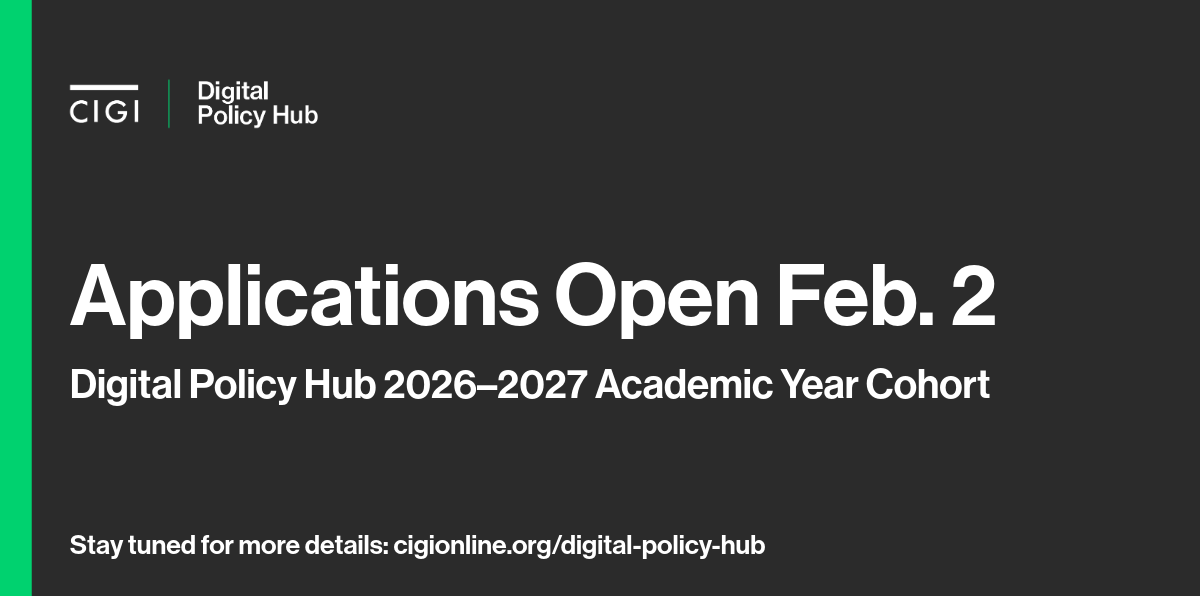
Applications for the Digital Policy Hub’s 2026–2027 cohort officially open on February 2. This collaborative program offers emerging scholars and innovative thinkers a unique platform to bridge the gap between technological disruption and policy development.

Stay tuned to our website and social media channels for further updates and specific application details!

Follow us
                         
© 2026 Centre for International Governance Innovation