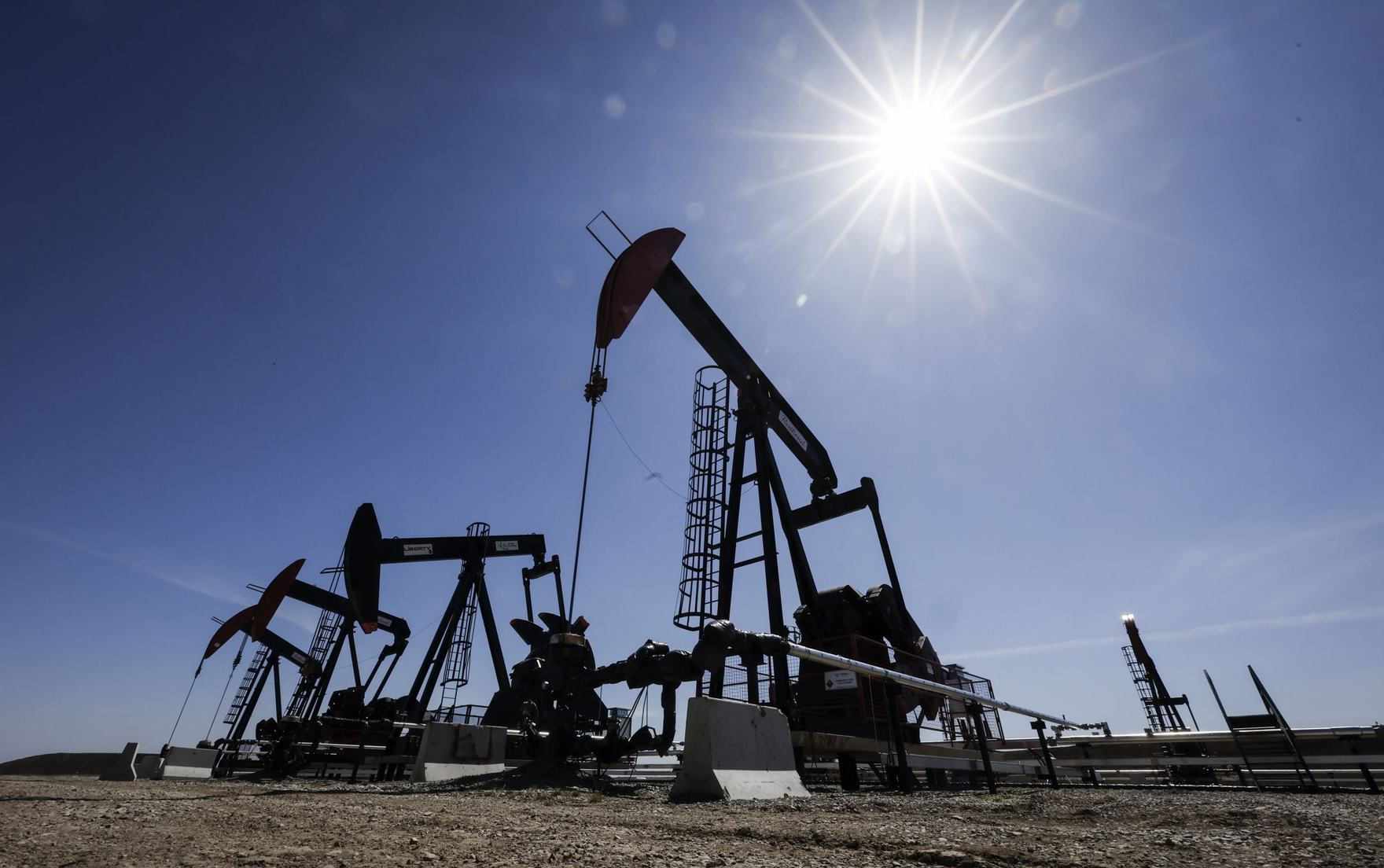
Analysts predict enormous economic headwinds as the global energy market continues to weaken. Iran’s closure of the Strait of Hormuz has exposed the strategic limits of American power and the unique vulnerability of the global economy. According to The Economist, we are on the verge of a global economic disaster. Indeed, Iran’s tight grip over the Strait of Hormuz has positioned it as a global energy gatekeeper capable of metering one-fifth of the world’s energy market. What the current “Iran Shock” has revealed is that dependence on petrostates and economic chokepoints is an existential risk to global stability — and a direct challenge to nations such as Canada.
Not only did the US-Israeli attack on Iran trigger a global energy crisis, but it also catalyzed fears of a worldwide economic depression. Forecasts on oil and liquid natural gas markets suggest that rising costs of transportation, manufacturing and food production would trigger stagflation across import-dependent economies. Canada, despite its resource wealth, remains exposed due to its fragmented provincial grids and dependence on cross-border energy trade. In response, nations can be expected to diversify away from oil and gas, even as Gulf countries struggle to maintain their long-term economic growth models. Reports indicate a loss of $600 million a day in tourism revenues alongside a significant departure of foreign residents and capital from the Gulf region.
Beyond Middle Eastern oil, many of the world’s largest economies have already begun making strategic investments in nuclear power generation. According to the World Nuclear Association, about 80 nuclear reactors are under construction worldwide, with plans for another 120. What is striking about this energy buildout is its geographic concentration: Asia accounts for the vast majority of activity, underscoring a strategic power shift from West to East. Not surprisingly, China dominates these efforts with roughly half the world’s projects, followed by India, Russia, Egypt, Türkiye and South Korea.
China’s Energy Renaissance
Goldman Sachs projects that China could reach broad energy self-sufficiency over the next three decades, coinciding with its enormous manufacturing capacity. Beijing has paired the country’s renewables boom with major nuclear energy projects and pioneering experiments in alternative reactor design in a bid to achieve energy autonomy. Alongside steady domestic fossil fuel output, the country’s dominance over renewables and nuclear reactor manufacturing is now driving a new energy strategy that has already begun reshaping global markets. Chinese exports are surging, providing “the cheapest electricity in history,” and the payoff is not merely energy sovereignty but also strategic wealth creation on a historic scale.
Over the past 20 years, China has come to dominate what it calls the “new energy” industry. China’s clean energy industries drove more than 90 percent of its investment growth in 2025, making these sectors larger than all but seven of the world’s economies. The country now manufactures 90 percent of the world’s solar panels, 60 percent of wind turbines and 75 percent of lithium-ion batteries, and installs more renewable capacity each year than the rest of the world combined.
In fact, China’s breakneck investments in clean energy are accelerating a nuclear renaissance that could help double global nuclear capacity over the next two decades, supporting surging electricity demand from artificial intelligence data centres and industrial electrification. This ongoing construction boom carries profound implications for the future of energy and the global balance of power. For nations investing in clean energy, the payoff is strategic resilience and technological leadership. For those sitting on the sidelines, the risk is economic and financial stasis.
Energy Sovereignty and the End of the US Era
History may not repeat itself, but it certainly does rhyme. In 1956, Egypt’s then President Gamal Nasser nationalized the Suez Canal, exposing the terminal decline of European imperialism. Britain and France, still clinging to the illusion of imperial dominance, responded with a coordinated military expedition. In the end, the intervention collapsed — not from battlefield defeat but from the swift and decisive exercise of American and Soviet power. That episode — now known as the Suez Crisis — marked the psychological and strategic end of European imperialism. The same is now true for the American empire.
Iran’s decisive control over the Strait of Hormuz has exposed the strategic weakness of US power projection. Indeed, this new reality demands a fundamental rethinking of Western energy security. For decades, the United States and its allies have operated under the assumption that carrier strike groups and regional military bases could guarantee the free flow of commerce through economic chokepoints. Iran’s decisiveness has now rendered that assumption obsolete. What was once a theoretical vulnerability has become a concrete and present danger — one that no amount of naval firepower can fully neutralize without risking a wider, more destructive conflict.
Western analysts have been slow to understand the geopolitical dimensions of clean energy. The Iran Shock should serve as a wake-up call. While conventional wisdom now calls for increasing fossil fuel production, the reality is that the petro-dollar economy is entering a period of sustained crisis. Taken together, the United States and Europe account for one-quarter of global demand for solar panels but produce barely three percent of the technology. By investing in nuclear energy capacity, scaled manufacturing of renewables and grid modernization, China is poised to emerge stronger from the current Iran Shock. Canadian policy makers appear to be taking note. Ottawa’s recently announced national electricity strategy — which aims to double Canada’s grid capacity by 2050 — signals a shift in that direction. By following China’s pragmatic path, Canada could build a secure, affordable and resilient energy future that turns energy crises into a lasting strategic advantage.