Copyright: Project Syndicate
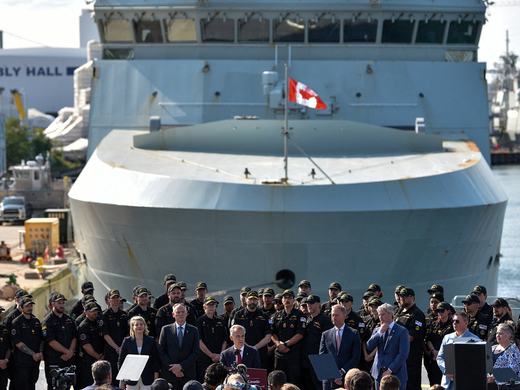
Faced with a rapidly changing global terrain, Canada is adjusting its footing. The new reality is one where technological control, financial leverage, national security, and market access are intertwined and increasingly deployed for strategic ends. The implications are particularly profound for outward-facing, trading economies like Canada. We may see soon if new middle-power strategies articulated by Canadian Prime Minister Mark Carney and Finnish President Alexander Stubb can bear fruit.
Consider where we are in mid-2026. The United States, the global cop who backstopped the international system for many decades, has flipped the script and is now utterly consumed by an inward focus that is likely to persist in one form or another. Despite China proposing new principles for global governance, no country or coalition is willing or able to shape a new order—at least not yet. The result is a low-trust world, where international rules are weak, unclear, or simply overridden by great-power dynamics.
Canadians are under no illusions about what is at stake economically, politically, and philosophically. The second Trump administration's early decision to impose punitive tariffs on Canada showed a total disregard for North America's oldest and deepest partnership, as well as for the trade agreement that Trump himself signed during his first presidency.
Since the tariffs came at a time when Canada's relations with the European Union, China, India, and other emerging economies had weakened, they served as a wake-up call. Canada would need a new national vision and strategy that was not all-in on US integration. It would need to diversify its trade and hedge its foreign-policy commitments—conclusions that contributed in no small part to Carney's election.
The US-Canada relationship has faced challenges before, including during the days of the 1930 Smoot-Hawley Tariff Act and the "Nixon shock," when the US imposed a 10% surcharge on all dutiable imports in 1971. The latter occasion prompted Canada to consider a "third option" in which it would diversify economically and culturally, rather than pursuing further integration with the US. But that plan remained only a vision. With new trade agreements in 1989 and 1994 (the North American Free Trade Agreement), Canada doubled down on integration through tightly linked supply chains, aligned energy systems, and a highly interoperable security architecture.
The logic was clear: Canada could benefit from market scale, stability, and access in exchange for accepting increased dependence on a low-risk neighbor. The ever-more integrated arrangements delivered growth, predictability, and a degree of strategic shelter under a broadly liberal order.
Growing Apart
As politics in the US began to change, Canada probably should have seen the writing on the wall. After all, the renegotiated NAFTA, now called the US-Mexico-Canada Agreement, had contained an unusual sunset clause, and even Joe Biden's 2022 Inflation Reduction Act included hints of an America First-style reorientation. With each passing year, it became more obvious that economic instruments such as industrial policy, export controls, and subsidies were becoming tools of US statecraft.
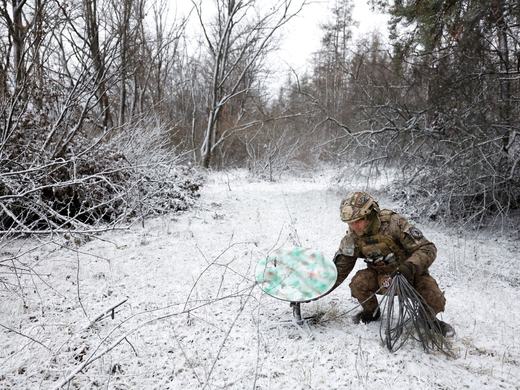
Parallel to the political changes, the economy also shifted. Value-added moved from tangibles to intangibles, including data, compute (processing power), and intellectual property. Supply chains once optimized for efficiency have been reconfigured for security, particularly in areas such as semiconductors, critical minerals, and energy inputs. Regulatory regimes governing data, competition, and AI became instruments of state power.
These political and technological pressures do not prevent North American integration from being logical, pragmatic, and beneficial in some domains. Geography still confers advantages, such as lower transaction costs, particularly for physical products. If Canada plays its cards right, it can maintain a continental anchor while expanding its options through new or renewed relationships elsewhere.
With Europe, that means deepening trade and regulatory alignment through existing agreements—perhaps by expanding the Comprehensive and Progressive Agreement for Trans-Pacific Partnership to include the EU—and engaging in standards-setting across data governance and emerging technologies. Europe's own regulatory reach could help Canada and other middle powers shape global rules.
Similarly, the Nordic countries are obvious partners, given their own robust governance standards, advanced innovation systems, and leadership in digital and clean technologies. By aligning more closely with them, Canada could influence how advanced technology systems are designed and governed.
To be sure, this may require a shift away from large, treaty-based institutions, toward flexible, issue-specific coalitions. Yet in a world where consensus is harder to achieve, such arrangements are the best option, especially when it comes to AI governance, supply-chain resilience, and other issues where policymakers must move quickly.
Political leadership matters here. In Carney, Canada has a head of government who brings credibility in financial and economic statecraft, deep transatlantic ties, and a strong track record of setting international standards (through his work on the Financial Stability Board). But these strengths also point to potential limitations. One of these is domestic: Canada's ability to execute large diversification strategies—whether in infrastructure, critical minerals, or industrial and security partnerships—will depend on the kind of internal political alignment that is often difficult to secure. Carney will have to be as effective as a politician as he was as a technocrat.
A second risk is conceptual. Carney's approach is grounded in a sophisticated understanding of economics, global finance, and regulation, but it may underweight the speed and scale of the transformation in the intangible economy. If value creation is increasingly driven by data, algorithms, cloud services, and platform dynamics, diversification strategies centered primarily on traditional sectors—even updated ones like clean energy—may overlook where long-term sources of value and leverage are being established.
Moreover, emerging technologies—especially AI—are better understood as system-level forces than as new sectors. Strategies that treat AI or quantum computing as a siloed field risk leaving Canada, and many other countries, in the position of a mere technology adopter, rather than an author.
Prudence Pays
How significant, then, is Canada's current reorientation? The short answer is that no wholesale decoupling is underway. Rather, the Carney government seems to be pursuing a prudent hedging strategy within an enduring framework. Still, the growing fusion of economics, security, and technology has altered the nature of 21st-century interdependence, and Canada has responded by being more intentional. Rather than automatically serving as an extension of US-centered systems, it is building optionality across a wider network.
Viewed broadly, this shift reflects a wider transformation in the international order. The postwar system was relatively clear, hierarchical, and US-anchored, whereas today's system is more distributed and contested. Allies will both hedge and align, and power will be exercised through standards, data regimes, and financial architecture as much as through traditional means. The fragmentation is real, but it is a layered and variable feature of the system, rather than a static one.
In this evolving order, proactive middle powers can serve as connectors, standard-setters, and brokers across overlapping and sometimes frayed systems. Canada's recalibration—maintaining deep integration with the US where it is efficient and beneficial, while building a wider network of partnerships—offers a model for preserving agency without succumbing to the fallacy of autarky.
Canada is redefining the terms of international engagement to reduce its strategic vulnerability in a harsher world. Whether this strategy proves sufficient will depend on its execution at home and a clear understanding of where power and value-add are actually shifting. With many other countries facing similar dynamics and choices, Canada will face competition in its quest for relative self-reliance.