The people building the most advanced artificial intelligence (AI) seem to think the race is about intelligence: creating the smartest, most capable AI systems. The leaders of Anthropic, DeepMind and OpenAI regularly posture about the imminent arrival of artificial general intelligence. When their companies promote new models, the first few paragraphs always highlight capabilities: the reasoning score, coding result or gap in performance over the last release. Other factors, such as cost or privacy, are buried after long descriptions of the breakthrough intelligence of new systems. The assumption that underlies this signalling is that the winner will be whoever builds the smartest model.
This is a mistaken premise. The developer who wins the AI race will not be the one with the most capable model, but rather the one who can deliver good-enough intelligence at the lowest sustainable price. There are naturally different definitions of what winning means, such as achieving the greatest market share or producing the highest-quality technology. I understand winning in economic terms, as Anthropic and OpenAI are, after all, for-profit businesses. Essentially, victory means achieving the greatest degree of durable diffusion: producing AI systems that are embedded in global economic processes and infrastructure.
History tells us that being first or being the best does not guarantee winning. Andrew Carnegie, for example, did not become the steel giant of the nineteenth century by first discovering or refining the purest steel. He won because, through vertical integration, ruthless cost accounting and the embrace of new technological processes, he produced high-quality steel more cheaply than any of his competitors. The mid-twentieth-century semiconductor boom teaches similar lessons. In the late 1960s, DRAM (dynamic random-access memory), an important semiconductor memory architecture, was first created in the United States. By the 1980s, the Japanese led in market share due to their high-quality and low-cost production methods.
The lesson here echoes today: The country that creates the most capable AI systems — also known as frontier — is not guaranteed to own what the frontier becomes once it is cheap. This is arguably already occurring with AI. The transformer — the architecture that underpins virtually every major modern large language model — was discovered by Google, an American company, in 2017. Today, Chinese labs such as DeepSeek and Alibaba have shown that they can consistently develop transformer-based models at a fraction of the cost of their Western competitors. By my own calculations, as of May 2026, DeepSeek’s best model was only three percent worse in quality than the best American model but 96% cheaper.

The Rising Cost of AI
Cost leadership in AI is unlikely to come from race-to-the-bottom price wars in which companies routinely undercut one another with unsustainably low prices in order to capture greater market share. Durable cost leadership will come from structural business advantages, such as owning the supply chain, the hardware or energy. As such, pure-play laboratories that are burning massive amounts of cash to stay a few points ahead on a benchmark are the most exposed.
In fact, the cost problem has already arrived. This past spring, an Nvidia executive noted that the cost of tokens for his team already exceeded the cost of the employees they were meant to augment. Uber’s COO likewise admitted that the company’s entire 2026 budget for AI-coding tools had been exhausted by April. Another enterprise, according to Axios, spent half-a-billion dollars on Claude in a single month after failing to cap employee usage. In other words, cost is becoming the main AI business story of 2026. Moving forward, the question about AI will be less about what a model can do, and more about its costs and if any developer can actually build it sustainably.
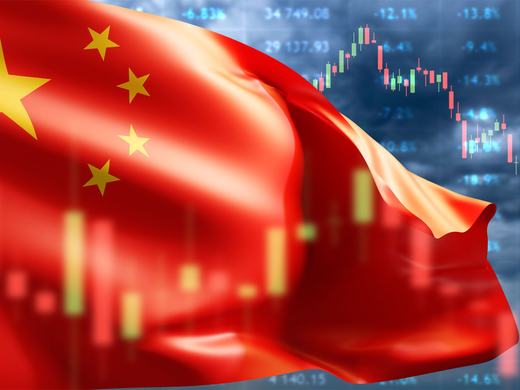
Chinese developers, such as DeepSeek and Alibaba, have come to terms with this intuition first. They now offer models nearly as capable as their Western rivals at a fraction (more than a tenth) of the price. These pricing discounts are likely authentic and genuinely structural. Many of the best Chinese models are open weight, backed by the state, powered by cheap energy and made by companies that tolerate thin margins. These structural realities have important governance implications. Western export controls, which have been a pillar of US-led AI policy against China, are designed to prevent China from creating frontier AI models. However, if the AI race is decided by diffusion, which, in turn, hinges on price, controls aimed at stalling advances in raw capabilities will do little to prevent Chinese dominance in the cost layer.
There is already evidence that DeepSeek is becoming one of the world’s most widely used AI models: For example, DeepSeek has captured 89 percent of China’s AI market share. Western businesses have resisted integrating with DeepSeek, citing concerns about data privacy, security and content restrictions that come with models shaped by the Chinese state. However, there is growing evidence that Western businesses are switching over, for the cost reasons one might expect. Debates about the salience of cost versus capability also raise the question of what winning even means. If intelligence becomes a commodity, the winning firms may not actually be those that develop AI. Coming back to Carnegie, the steel he made was an input. Much of the wealth it facilitated went to the railroads and skyscrapers built with it.
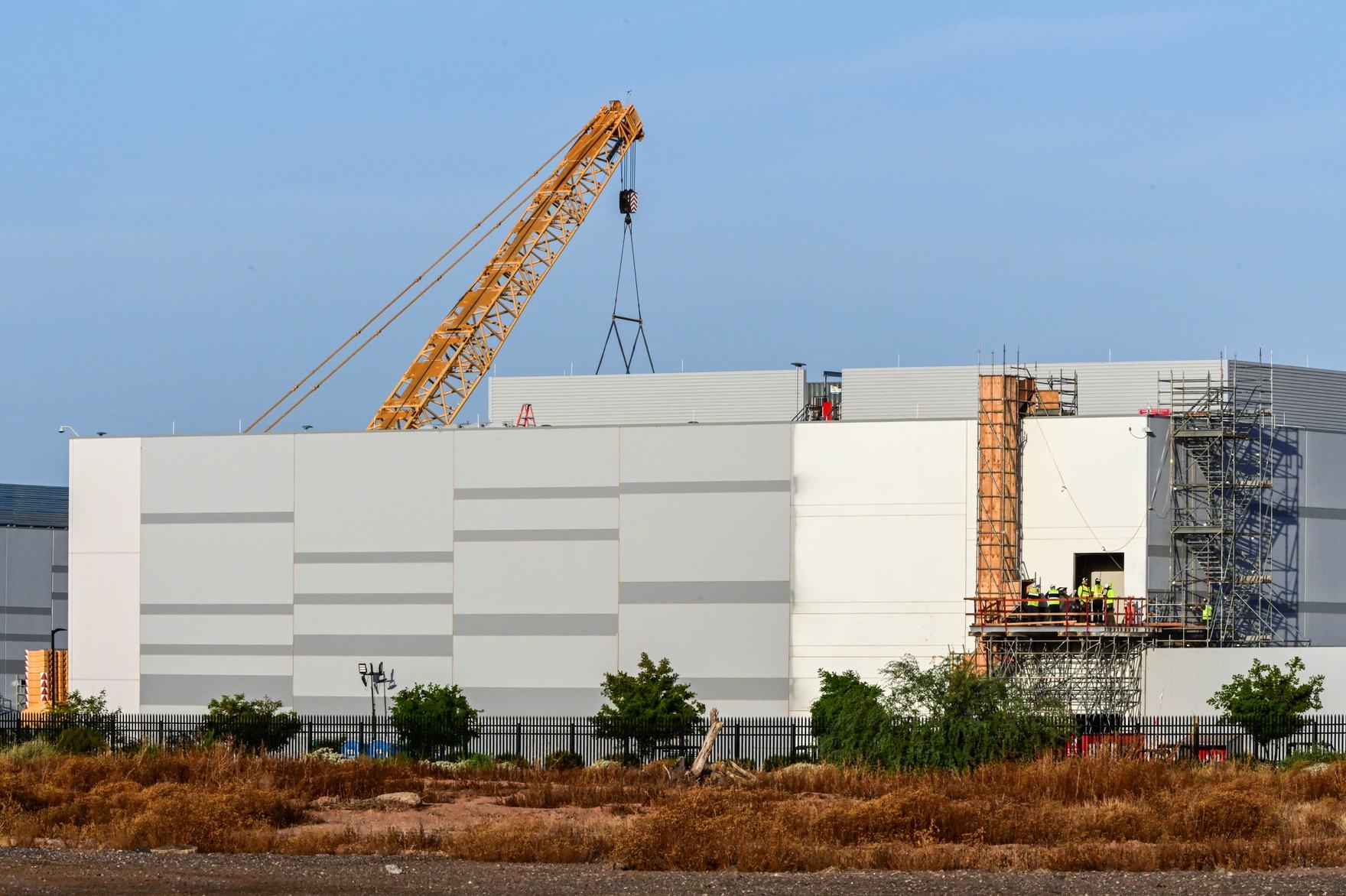
Currently, in the West, the best-positioned cost leader among the labs is likely Google. Google owns some of its own silicon, data centres and its distribution. Amazon is targeting a somewhat similar vertically integrated system but currently lacks a frontier AI model. OpenAI has realized that vertical integration also matters, announcing in late June that it has pioneered its custom AI chip.
Presently, no major AI player has settled into stable cost leadership. AI pricing has been chaotic in the last few years: Cursor’s botched 2025 shift to usage-based billing and the refunds that followed; Anthropic quietly pulling its coding tool from the $20-per-month plan, and then reversing its decision within a day after user complaints; and grumblings that Google’s recently released 3.5 Flash model came with unexpectedly inflated pricing. There are now also reports that OpenAI is considering steep price cuts to lure customers away from Anthropic, even as OpenAI is supposedly deep in the red, with profitability nowhere near in sight and filing to go public. This volatility is the signature of an immature market that has not yet found its cost leader. The coming wave of initial public offerings will likely answer some questions, as companies such as OpenAI and Anthropic are forced to go public with their financials. Investors will also reward companies that demonstrate sustainable unit economics in the long run. Ultimately, whoever might end the current pricing yo-yo will likely win out.
That said, the importance of pricing does not mean intelligence is fungible. After all, “good enough” is highly task dependent. For example, legal teams that cannot afford hallucinations will pay more for a marginally smarter model, and capability competition will certainly matter in that tier. However, most business workloads do not need a National Security Agency-hacking model; they need something competent, fast and cheap. In the end, Carnegie didn’t win by producing the purest steel — he simply produced the steel people could afford.